

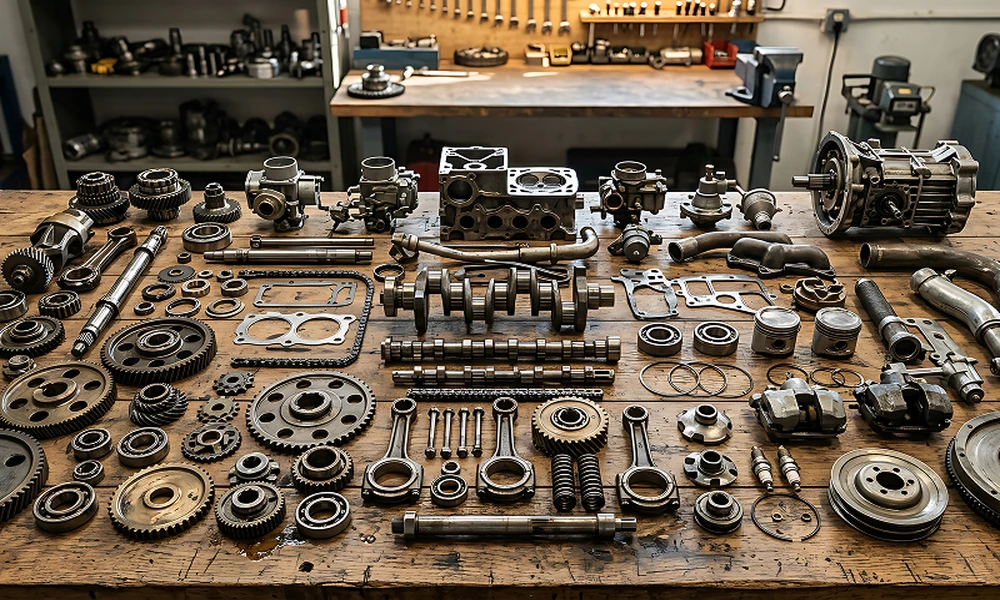
Replacing a single worn component often exposes just how interconnected a diesel engine really is, which is why certain diesel engine spare parts tend to get replaced as a group rather than one at a time. Understanding why these parts are bundled together can save both time and repeat labour costs down the line.
Why Some Parts Wear Out on Similar Timelines
Components that operate under similar stress or share a physical connection often reach the end of their usable life around the same time.
- Parts driven by the same belt or chain tend to experience comparable wear from continuous operation.
- Components exposed to the same heat, vibration or contamination often degrade at a similar rate.
- Replacing a worn part next to an ageing one frequently just delays an almost identical failure shortly after.
Timing Belt, Tensioner and Water Pump
This is one of the most well-known groupings in diesel engine maintenance, and for good reason.
- The tensioner supports the timing belt directly, so a worn belt often signals a tensioner nearing failure too.
- Many water pumps are driven by the same belt, making it efficient to replace them during the same job.
- Accessing one of these components usually requires removing the others anyway, reducing repeat labour.
Fuel Filters and Fuel Injectors
Fuel system components are closely linked, since contamination in one area tends to affect the other.
- A clogged fuel filter can force injectors to work harder, accelerating their own wear over time.
- Replacing injectors without addressing an old filter risks reintroducing the same contamination almost immediately.
- Technicians often inspect both together, since symptoms like rough idling can stem from either component.
Oil Filter and Oil Seals
These smaller components are frequently bundled together during routine servicing.
- Oil seals degrade gradually with heat exposure, similar to how filters lose effectiveness over time.
- Replacing seals without a fresh filter can allow the same contaminants to affect new seals quickly.
- Both are relatively inexpensive compared to the labour required to access them, making bundling practical.
Turbocharger Seals and Related Gaskets
Turbocharger work rarely involves just one component, given how tightly everything is packed together.
- Seals and gaskets surrounding the turbocharger are often disturbed during any related repair work.
- Reusing old gaskets after turbo work significantly increases the risk of leaks shortly afterwards.
- Replacing these smaller parts together avoids a second teardown for what would otherwise be a minor part.
Why Replacing Diesel Engine Spare Parts Together Often Makes Sense
Grouping certain diesel engine spare parts during a single service visit generally reduces long-term costs, even though the upfront bill may look larger than replacing just one component.
- Labour costs are often shared across multiple replacements accessed during the same teardown.
- Avoiding repeat failures reduces the total number of service visits over the life of the engine.
- A single, well-documented service record is easier to reference than several scattered repairs.
Questions to Ask a Mechanic Before a Replacement Job
A few direct questions can help clarify whether bundling makes sense for a specific repair.
- Which nearby components are typically replaced together during this specific job?
- Does reusing an older part here create a meaningful risk of early failure?
- Is there a cost or labour advantage to replacing these components now versus separately later?
Signs a Grouped Replacement May Be Worth Considering
A few practical signs can suggest it’s worth discussing a grouped replacement rather than fixing just one part in isolation.
- The engine has already covered significant mileage since these components were last serviced or inspected.
- A mechanic notes visible wear on a neighbouring part while addressing the original issue.
- The vehicle is due for a major service anyway, making it a convenient time to address related wear together.
- Previous repairs in this area have needed repeat attention within a short period of time.
Planning Replacements With the Full Picture in Mind
Diesel engines tend to reward a bit of foresight, since a handful of interconnected parts rarely fail entirely in isolation. Approaching a repair with the full picture in mind, rather than reacting to one symptom at a time, generally keeps both costs and downtime more predictable over the engine’s working life.
Keep your engine running strong with our full range of diesel engine spare parts, sourced and stocked for reliability – contact Maxindo Enterprise today.
